Devoko 32-Gallon Resin Deck Box: Is It a Seat, a Shed, or a Compromise?
2026-09-01 · Ingrid Falk
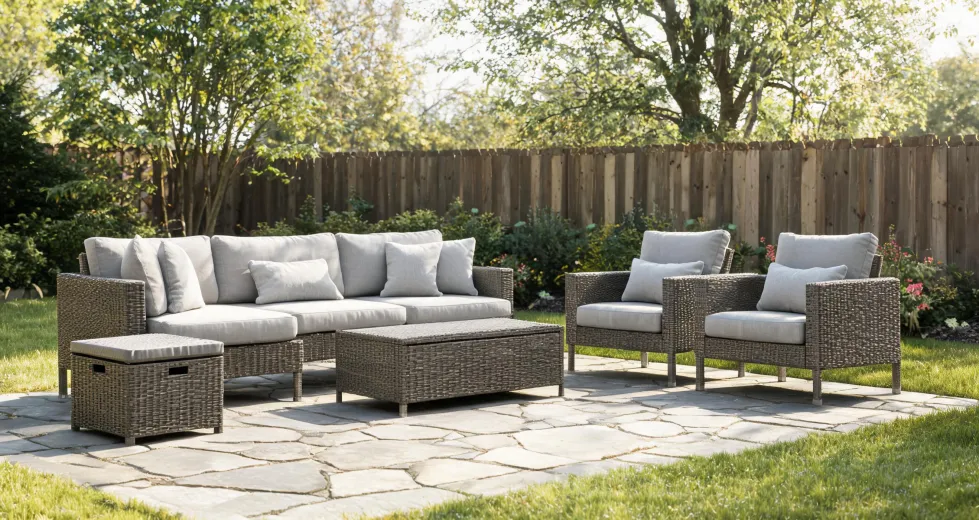
Every patio has a breaking point. Yours might be the third time you trip over a garden hose, or the morning you realize the seat cushions you bought last spring have been living under a plastic table for nine months. You need a box. Not a shed, not a closet — a box that will sit outside, swallow the clutter, and maybe let you perch on it while you grill. But when you start looking, the first number you see is gallons, and the bigger the number, the safer it feels. That is the deck box dilemma. A monster 85-gallon chest sounds like the obvious answer, but it will eat a quarter of your porch, cost twice as much, and turn the seating question into a joke. A 32-gallon box, meanwhile, looks almost toy-like next to it. Yet if you match the size to what you actually own, the smaller box can do the job and leave you room to move. The real question is not whether bigger is better. It is whether you know what to look for before you let a gallon label decide for you.
The deck box dilemma: storage vs. seating
Every patio has a breaking point. Yours might be the third time you trip over a garden hose, or the morning you realize the seat cushions you bought last spring have been living under a plastic table for nine months. You need a box. Not a shed, not a closet — a box that will sit outside, swallow the clutter, and maybe let you perch on it while you grill. But when you start looking, the first number you see is gallons, and the bigger the number, the safer it feels. That is the deck box dilemma. A monster 85-gallon chest sounds like the obvious answer, but it will eat a quarter of your porch, cost twice as much, and turn the seating question into a joke. A 32-gallon box, meanwhile, looks almost toy-like next to it. Yet if you match the size to what you actually own, the smaller box can do the job and leave you room to move. The real question is not whether bigger is better. It is whether you know what to look for before you let a gallon label decide for you.
So how do you choose? Start with the job description. List what goes inside: a few hand tools, two cushions, a small bag of pool toys, maybe a bottle of weed killer. That is roughly the everyday stack of a moderate patio. Then ask whether the lid will ever hold a person. If the answer is yes, you need a box that quotes a real weight limit, not a vague 'heavy-duty' promise. And because the box lives outside, the material has to survive sun, rain, and frost without cracking, fading, or turning brittle. These three criteria — capacity, material, and lid rating — matter more than any marketing phrase on the box. The rest is decoration.
Before you compare prices, set your own thresholds. Capacity should be matched to a realistic gear list, not to what fits a mythology of 'someday.' Material should be UV-resistant and all-weather, because a box that warps after one summer is a box you will replace twice. And the lid rating should be high enough that sitting is safe — think several hundred pounds, not a cursory number. Armed with these tests, you can walk into a product page and see past the color options and the sale badge. You will know exactly which number to check first. In the next section, we break down what each spec really means.
What actually matters in a resin deck box
Capacity is about fit, not size. A 32-gallon box holds roughly the volume of a large laundry basket — enough for a couple of folding chairs, a kneeling pad, a dozen tools, or several throw pillows. People assume they need more, but the real question is what you will store every day, not what you could store in a panic. If you keep a leaf blower, a hedge trimmer, and a ladder, 32 gallons will frustrate you within a month. If you only need to hide the daily clutter, it is plenty. The trick is to do a fast audit: pile everything that needs shelter, estimate its volume against a bushel basket (about 8 gallons), and add a third for headroom. That number should decide your starting size, not the width of the box's marketing photo.
Material is where cheap boxes betray you. Devoko's product pages show their 82-gallon outdoor storage bench built from 'UV-resistant polypropylene' that is 'built to resist fading, cracks, and moisture.' That is the language you want to see. Polypropylene is the workhorse plastic of outdoor furniture: it shrugs off rain, does not rust, and stays flexible in cold weather instead of shattering. But the careful phrase is 'UV-resistant' — it means the plastic has stabilizers that keep it from turning chalky and weak after months of direct sun. The same evidence page lists a 'reinforced lid' that supports 800 pounds. That single number tells you the engineers assumed people would sit on this thing, so they overbuilt the top. In a 32-gallon box, you are looking for the same two clues: a material description that mentions UV or weather resistance, and a weight rating on the lid that is high enough for a real adult — not a 'sitting capacity' tucked in the fine print. If the page is silent on either, treat the box as furniture for the garage, not for the patio.
Now look at how two sizes from the same brand frame the same priorities. Devoko lists an 85-gallon resin wood-look deck box at $99.99. Its product copy emphasizes 'IDEAL STORAGE: 85 gallons perfect for patio storage' and notes the resin construction gives 'comfortable bench seating with a weight capacity of 660 pounds.' That is a storage-first box with a seating bonus. Then compare it with the 82-gallon bench at $179.99, which leads with the word 'bench' and pushes the 800-pound reinforced lid. Same brand, same material family, but a different balance of the two jobs. The 85-gallon box is cheaper and bigger; the 82-gallon is pricier but more seat-focused. Neither tells you that a 32-gallon version from the same lineup automatically inherits those values — but the pattern does: Devoko thinks in terms of resin durability and lid ratings, and those are the features to verify on whatever size you choose.
What Devoko's track record tells you
What does Devoko's own catalog tell you about how it builds deck boxes? Two product pages paint a consistent picture. The 85-gallon resin wood-look box lists a 660-pound seating capacity and promises all-weather resin with a wood-look texture. The 82-gallon bench ups that to an 800-pound reinforced lid and specifies UV-resistant polypropylene. Taken together, these are not random numbers. They show a brand that quotes structural limits on its public pages and uses material language you can verify. When a company states a weight rating openly, it is usually because the product was tested against that load. The same pages also make practical promises — 'store gardening tools, pool toys, or seasonal decor' — which tells you the intended audience is the backyard, not the warehouse. For a 32-gallon buyer, this is encouraging: the brand cares about the seat and the shell, not just the label.
The 800-pound lid on Devoko's 82-gallon bench is the most useful spec to understand. A lid that supports 800 pounds means the hinge brackets, the top surface, and the wall-to-top connection are all built to take a seated adult — and then some. It is not a decorative number. The same description says the body is 'built to resist fading, cracks, and moisture,' which is exactly the trio of forces that kill a resin box. When you see a weight rating paired with weather-resistance language, you can trust the box was engineered as furniture, not as a storage bin with a flat top. That is why material and rating matter more than gallon size. An 85-gallon box with a 300-pound lid is a storage unit you cannot sit on; a 32-gallon box with a 500-pound lid is a seat that happens to hide your garden hose. Check the rating first, then decide if the size fits.
Devoko is not a one-product operation. Its public storefront shows a massive catalog — sectionals, dining sets, umbrellas, zero-gravity chairs, and more, with hundreds of items across categories. That breadth means the company has skin in the outdoor-furniture game, not just a single box to sell. A brand that builds patio sofas and dining sets has to understand weight loads, weather exposure, and what customers expect from a surface they sit on. You can see that background in the deck box line: the weight ratings and material specs read like pieces of a broader engineering vocabulary. This does not make Devoko perfect, but it raises the baseline of your confidence. When you shop a 32-gallon model, you are not buying from a garage-made importer; you are buying from a company with a track record of designing for the outdoors. That is a real advantage, even if the exact 32-gallon specs still need your own verification.
Sizing up the 32-gallon option
So does a 32-gallon Devoko box make sense? Apply the three criteria from earlier. Capacity: if your gear list is the moderate stack we described — hand tools, two cushions, a small bag of pool toys — 32 gallons covers it with room to spare. Material: because the brand uses UV-resistant polypropylene on its larger models, it is reasonable to expect a similar resin on the smaller one, but you must check the product page before assuming. Lid rating: this is the make-or-break. A seat needs a rated lid, not a thin cover. If the 32-gallon model's page states a weight limit in the hundreds of pounds and mentions reinforced construction, it can pull double duty. If it only says 'storage,' treat seating as a bonus at your own risk. The size alone does not disqualify it; the missing spec does.
Seating and storage do not have to fight. A 32-gallon box is roughly 2 feet by 1.5 feet by 1.5 feet — small enough to tuck against a wall, tall enough to sit on if the lid is solid. Compare that with the 85-gallon monster, which may be too wide and too tall for a small porch and forces you to dedicate a corner to it. The smaller footprint leaves you room for a chair or a plant, and the psychological benefit is real: a modest box invites you to keep it tidy, while an oversized one becomes a 'garage for everything' that swallows any junk. The downside is obvious — you cannot store a lawn mower or a bag of mulch. But for the moderate user, the edit is healthy. It makes you decide what belongs on the patio and what belongs in a shed. That is a feature, not a flaw.
Before you click buy, run this fit check. 1) Gather everything you plan to store in the next season. 2) Estimate their combined volume; if it fits in two or three standard laundry baskets, 32 gallons is enough. 3) Ask who will sit on it. If you or a guest will, note the required lid rating — a common safe threshold is several hundred pounds. 4) Check the product page for 'UV-resistant,' 'polypropylene,' or an equivalent weatherproof claim. If all three check out, the 32-gallon size is a legitimate choice. If the page is thin on material or rating, move to a bigger model or another brand. The gallon number is just the start; the real decision lives in those two specifications.
The decision rule that settles it
Here is the rule that settles it. First, estimate your real storage volume in laundry baskets. If your gear fits in three baskets or fewer, a 32-gallon box can handle it — go to step two. If it takes more than three, size up without guilt. Second, check the lid weight rating. For a seat, the rating should be in the hundreds of pounds and the word 'reinforced' should appear. If the rating is absent or low, the box is storage only, and you should decide whether you are willing to give up the seat. Third, verify the material will survive your climate. Look for UV-resistant, polypropylene, or comparable outdoor plastic. If all three gates pass, the size is right and the box will serve you for years. If any gate fails, keep looking — the perfect box is the one that matches your audit, not the one with the biggest number on the front.
The rule has limits. If you live in a region with brutal winters, even UV-resistant polypropylene can become brittle after a decade, so plan to replace the box eventually, no matter the brand. If you routinely host more than two people on your deck, a single 32-gallon lid is not a substitute for a real bench; buy a larger seat-style box or add a separate chair. And if your storage needs include long-handled tools or a leaf blower, no 32-gallon box will work — do not force it. The rule also assumes you are willing to edit your patio once a season. If you prefer to toss everything in and shut the lid, you will be happier with an 85-gallon model. The decision rule is not 'small is better'; it is 'match the size to the job, then verify the build.'
For a moderate patio with two cushions, a few tools, and a bag of pool toys, a 32-gallon resin deck box from a brand that publishes real weight ratings and weather-resistant resin is the right call. It stores the daily overflow, leaves your deck open, and gives you a place to sit — provided you verify the lid rating and material before buying. The worst mistake is trusting the gallon sticker alone. Let the rule from this article guide you: measure your gear, check the lid, check the plastic. When those three line up, the size stops being a compromise and becomes a smart fit. That is the decision, and now you know exactly how to make it.
So when someone tells you 32 gallons is too small, smile, point to your measured gear list, and let them watch you sit down on a box that does exactly what you need.

Ingrid Falk
Ingrid Falk is an outdoor living products analyst specializing in fences, pergolas, gazebos, canopies, greenhouses, shade sails, patio sets, outdoor sofas, and weatherproof cushions. She uses ISO 4892-2 and ASTM G154 weathering methods while comparing UV color change, coating adhesion, corrosion resistance, frame load, joint stability, water shedding, and dimensional movement. Her work helps garden retailers, project buyers, and hospitality operators select structures and furniture suited to wind exposure, climate, installation method, maintenance, and expected occupancy.