Devoko Five-Piece PE Rattan Sectional: Weather, Durability, and Color
2026-10-12 · Mateo Rivas
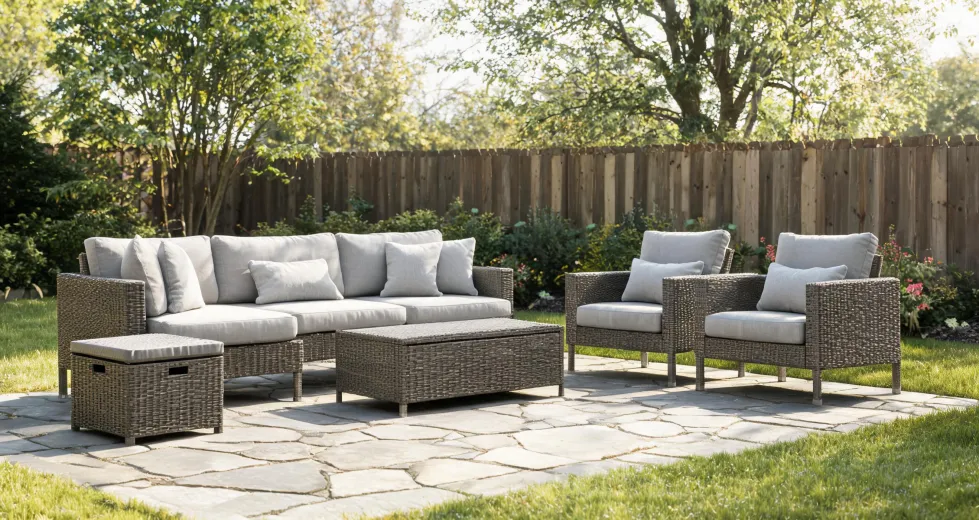
A five-piece outdoor sectional is one of the few patio purchases you live with for years, and it fails slowly rather than dramatically. A neighbor bought a woven set that looked perfect in the showroom. She set it on a west-facing patio in June, and by the second week of July she was hauling four seat cushions into the garage every time rain showed in the forecast. By the following June the pale covers had gone patchy on the sun side, the weave gaps under the seats held a shallow puddle after every storm, and she had spent about ninety dollars on a cover she used twice. That is the real price of choosing wrong: not the sticker, but the hauling, the covering, the fading, and the replacement two summers later.
The Devoko five-piece set deserves to be judged on its own terms, and the label you would lean on first is the least useful. Its all-weather PE rattan wrap is the least deciding part of the package. What actually determines whether it holds up on your patio is how the five pieces shed a breezy rainy night and how the light color survives sun, and both carry more weight than the weave's reputation. So check three things in order: the loads the set faces, the drainage it needs, and what the color pays off against what it risks.
The Three Loads a Patio Sectional Has to Survive
Before comparing this set with anything else, separate the three loads a patio sectional has to survive, because they fail independently. The first is water: what a breezy rainy night puts on every horizontal surface, seam, and cushion. Devoko's own page describes the frame as all-weather PE rattan that ensures durability and stability in outdoor environments, which settles the strand material but not the whole set. The second is sun, which decides two things at once: how hot the surface gets at midday and how long the color lasts before it shifts. The third is the living load, the daily weight of people sitting down, the twisting when you drag a piece across pavers, and the repeated rebuilding if you break the five pieces apart.
A set can pass one of these loads and fail another, which is why a single all-weather claim never closes the question. A frame can be perfectly weather-resistant while its cushions soak through every storm, and a cushion fabric can hold its color for three summers while the frame joints start to creak. Devoko says the set adds comfort and warmth on a sunny afternoon and on a breezy rainy night, a statement about the whole package working in both conditions. Walk the loads in order and see which one the set has a real plan for. Water comes first, because a soaked set is unusable today; sun second, because fading is slow and easy to ignore until it is finished; living load last, because you control it by how you arrange and move the pieces.
What a Rainy Night Does to the PE Rattan Weave
The reason a woven PE rattan set still needs a drainage plan comes down to geometry. The strands wrap a rigid frame and leave a small gap at every crossing, and those gaps are exactly where water collects and sits against the frame underneath. The rattan itself shrugs off rain, which is what all-weather means here and why the set stays durable and stable outdoors, but water that drains through the weave lands on the frame rails and the undersides of the cushions and can sit there for days in humid weather.
Run the sequence after a storm and the real problem shows up. Rain arrives sideways on a breezy night, so it reaches the seat surfaces and the sofa backs, not the seat tops alone, and it wicks into the cushion cores from below. Leave the cushions out and the foam takes on water; a wet foam core is heavy, slow to dry, and the start of mildew. What you are actually managing is standing water and soaked foam, not the strands, and the strands are the part the marketing talks about.
The plan is short and cheap. Set the pieces so water runs off instead of pooling, which means a patio with a slight fall toward a drain rather than a low spot under the coffee table. Bring the cushions in before any storm with real rain in it, or keep a cover cut for the full five pieces. After a heavy night, tip the ottoman and the seat frames onto one edge for a few minutes so trapped water runs out of the frame rail, then wipe the seat platforms dry before the cushions go back. Twice a season, press the frame joints at the corners of each piece and look for soft spots or rust bleed, because the frame carries the load and the weave hides the damage until you see it from underneath.
Where a Light Color Pays Off and Where It Fades
Color is where this set makes its most visible bet. The light tone does two jobs at once. It reflects more of the sun's energy, so the seat stays cooler to sit on than a dark brown or charcoal weave would, and it visually brightens and enlarges a patio, which is why a small or shaded space reads larger with this set on it than with a heavy dark one. Devoko calls the color fashionable and versatile and says it brightens and enlarges the patio, and both effects come from the same physics: a light surface bounces more light back and absorbs less heat.
The property that makes the light color comfortable is also the one that makes it demanding. A pale surface shows dust, pollen, and the gray film that settles after rain far sooner than a dark weave would. And every color shifts under several UV seasons, because the sun breaks down the pigments and the surface of the material; a light neutral goes chalky and slightly yellow rather than obviously different, so the change creeps up on you.
That combination points to a clear fit. On a shaded patio, a covered balcony, or a small courtyard, the light color works in your favor, since the reflectivity keeps the cushions cooler and the brightness opens a tight space. On a fully exposed, west-facing slab that takes sun from noon to sunset with no shade, the same color is doing more fading work than you want. If your patio is in that second group, budget for a cover or a shade sail, or accept that the cushions will look two years older than they are.
How the Five Pieces Fit a Real Patio
The reason the five-piece format changes the calculation is that each piece has to hold its shape and stay stable on its own rather than as part of one welded body. Devoko's stability claim carries more weight on a modular set than on a single sofa, because a modular piece gets picked up, moved, and reset far more often, and every move tests the frame and the corner joints.
In practice the five pieces are four seats plus a coffee table, with an ottoman in the mix, and they go together three ways. Pushed into a corner, they make one L-shaped sectional that wraps a patio edge; the long side usually runs around eighty inches and the short side around sixty, which seats four without blocking a walkway. Split apart, the same pieces become a two-seat sofa facing two separate chairs across the coffee table, which suits a narrow balcony or a patio where you want to walk between the seating. Or float the ottoman as a footrest and a spare seat for a fifth person.
What you trade for that flexibility is a fixed chaise and one confident footprint. A non-modular sectional locks in a chaise end and a single large outline, and it feels more solid because it is one heavy object. This set hands you options instead of one perfect shape, and you pay for them in the small gaps that open between pieces when you push them together on uneven pavers. Because the same light color runs across all five pieces, a split layout still reads as one set rather than borrowed furniture, which is why the color and the modular format work together here.
When a Metal or Wood Set Beats This One
Compare this set honestly against three alternatives. Powder-coated aluminum or steel frames with cushions are lighter, have no weave to trap water, and dry fast, which makes them the better pick on a patio that gets hammered by rain and never has shade; the trade is that bare metal gets hot in full sun and dents or scratches visibly. Solid teak or acacia ages beautifully and can be left out for years, but it is heavy, needs oiling once or twice a year, and costs more for the same seating.
Natural wicker is the one to rule out for year-round outdoor use. It looks close to PE rattan and costs less, but it soaks up moisture and rots, molds, and sheds strands within a season or two in a wet climate. The reason to choose the Devoko set over any of these comes down to the material: PE rattan resists moisture and needs no oiling, so you get the woven look and a low-care finish at a weight one person can move.
Exclude it when your priority is a hard, cool-to-touch surface that never needs a cover, when you want a built-in chaise and one rigid shape, or when your patio is fully exposed and you are not willing to store cushions. In those cases a metal set with quick-dry cushions, or teak if you plan to leave it out permanently, fits how you actually use the space better than this one does.
Buying this set buys a light-colored PE rattan sectional that handles sun and rain with little care and makes a small patio read bigger, at a price well under teak. What you give up is the heavy, sink-in feel of a thick-cushioned metal or teak build and the near-zero-maintenance certainty of a bare aluminum frame; you are trading a few minutes of cushion management and a lighter frame for the woven look and the lower cost. If you can live with hauling the cushions in when serious rain is coming, this is the better buy. If you cannot, a powder-coated aluminum set will suit your patio better, and no light color will rescue a set you resent maintaining.

Mateo Rivas
Mateo Rivas is a garden watering and irrigation analyst covering drip systems, emitters, garden and soaker hoses, hose reels, sprinklers, nozzles, misting systems, and watering cans. He applies ISO 9261 test methods while examining emitter discharge, pressure compensation, flow uniformity, burst pressure, kink resistance, spray pattern, filtration needs, and water-use efficiency. He helps growers, landscapers, distributors, and homeowners size zones and select components for available pressure, planting layout, climate, water quality, and maintenance access.