Devoko Outdoor Chaise Lounge Set of 2: How to Pick the Pair That Lasts
2026-09-09 · Ingrid Falk
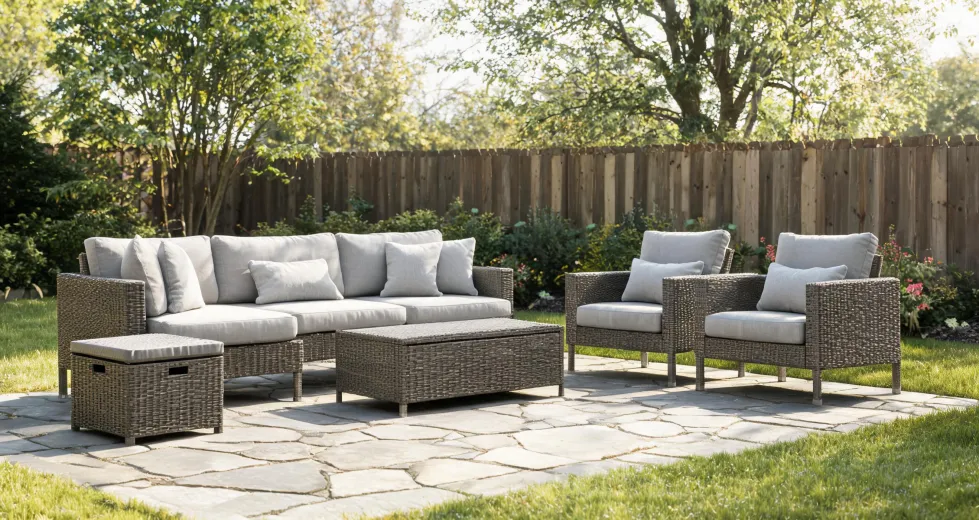
Before you compare prices on a Devoko outdoor chaise lounge chair set of 2, check what each two-lounger package is made of. The repeatable answer is that a matching pair only beats two separate chairs when each unit has an adjustable back, an all-weather rattan frame, and cushions that can be taken off for cleaning or storage. Treat the set count as a layout convenience, not as proof of value; the real test is whether that pair actually fits your patio exposure and how you plan to recline.
A Devoko Chaise Lounge Set of 2: The Practical Answer
Here is the short verdict for anyone shopping a Devoko outdoor chaise lounge chair set of 2: do not let the phrase 'set of 2' do the deciding for you. A two-pack solves the color-matching problem—both frames arrive in the same finish and the cushions line up—but that is a visual convenience, not a durability or comfort guarantee. The chairs that earn their keep on a patio are the ones whose backs can be moved from an upright reading angle to a full recline, whose woven frames are rated for outdoor weather rather than for occasional deck appearance, and whose seat cushions can be lifted out of the rain when the forecast turns. If the set you are comparing has fixed backs and no removable cushion, the lower price is usually covering a chair that will spend more time leaning against the wall than under you on a sunny afternoon. That is why the buying question is never 'how many loungers do I get for the money?' It is 'which two loungers will still be comfortable when the sun moves and the humidity rises?'
The exact buying advice is encoded in Devoko's own catalog language. One official listing for a chaise lounge set is titled 'Outdoor Rattan Adjustable Back Cushioned Patio Folding Chaise Lounge, Back Adjustable,' and it shows a final price of $189.99 after an original reference of $309.99. The brand is telling you which upgrade to pay for: woven rattan framing, a folding structure that eases storage, a back that changes position, and cushions included with the frame. When a two-chaise offer lacks those words in its description, it belongs to a different product tier than the set with the higher from-price. Look for those terms in the full product title rather than in the bullet points, because the title format is how the manufacturer separates a true chaise from a fixed patio armchair. That phrase 'back adjustable' appears before the set configuration because it is the feature that turns a static deck into a place where a two-chair layout can be used for conversation, sunbathing, and reading within the same afternoon.
The catch is that none of those features matter if the pair overwhelms your space. Before you settle on any two loungers, measure the actual footprint: two reclined chairs take up more length than upright chairs, and you need a clear walking lane between them or at the foot of the deck. Also ask how the set will be exposed. A balcony with afternoon sun and no cover has a different tolerance than a covered porch; if rain reaches the seat, a rattan frame and cushions need to be moved or shielded, not just admired. The same set that looks ideal in a showroom photo can become the source of constant fuss when it is two inches too long for the door it must pass through on the way to winter storage. So the practical boundary is not about chair count—it is about whether the two-lounger system fits the shape of your patio routine. If you mostly lie out alone, two chairs may simply be one chair too many; if you host a couple, the pair earns its footprint.
What Two Loungers Do to the Rhythm of a Patio
Why does a two-lounger setup so often feel wrong once it is in place? The cause is usually spatial logic, not chair quality. Two identical recliners placed side by side create a sightline that works only when both occupants face the same view—garden, pool, or yard—and when the gap between the chairs is wide enough for someone to pass without kicking the frames. If the chairs are angled toward each other you turn a restful moment into a forced conversation; if they are pushed against a railing you lose the foot room that makes reclining comfortable. The pair works because it doubles the usable area, but only when the arrangement respects the traffic flow of the deck. Ask why you wanted two before you add the second unit: is it for a couple to talk while facing the same horizon, or for two separate naps that happen to share the same furniture order? The answer changes how much spacing and adjustability you need.
Once the layout is right, the mechanism that makes two chaises feel effortless is the adjustable back. A fixed-back lounger commits you to one posture, so the chair gets used only when that posture matches your energy level. With a back that moves from near-upright to almost flat, the same pair shifts from a conversation seat at four in the afternoon to a sunbathing station at noon, then back to a reading chair in the evening. That range is what turns 'two pieces of patio furniture' into 'a small relaxation zone that adapts across the day.' The folding frame reinforces this because it lets you lean the chairs against a wall or slide them under an eave when the grass is being cut or the cushions are being cleaned. In short, the mechanical range of the chair directly controls how often it leaves storage and enters use. When a pair has independent back locks, one side can be fully reclined while the other stays upright, so the same two-chair set serves a sleeping child and a reading adult at the same moment. That split-position ability is the mechanism behind most 'we actually used them all summer' reviews. If the back lock feels weak or the pivot grinds when you test it in the store, the failure will appear again after a month of sun exposure.
That mechanical range is also why you should treat Devoko's catalog breadth as a condition to filter, not a distraction. The official collection page lists 21 products under the Garden category and 9 under Lounge Chair, so the brand is signaling that 'lounge' is a specific category rather than a catch-all label. If the description calls a pair a lounge set but it has no recline control, compare it against the items in the Lounge Chair filter, not against the Garden section. A catalog breadth of 21 Garden products means patio furniture is built for different uses—dining, seating, conversation—and a set of 2 chaises only works when you land in the lounge subcategory. The condition changes your search because it stops you from believing that all woven outdoor chairs share the same frame behavior. Use the category count as a sanity check: if there are nine lounge chairs and twenty-one garden products, the brand has room to build a basic two-position lounger and a multi-position adjustable model under separate names.
Frame, Back, and Cushion: A Three-Point Buying Check
The first physical check for any Devoko two-chaise purchase is the back mechanism, because it decides how many postures the chair can hold. Sit in one lounger after it is fully reclined and push against the frame; a good design locks firmly at two or three positions and does not thunk down when you shift. Look for the release lever or trigger near the arm, and test it from a seated position, not from a standing stretch—an awkward control is the kind of detail you will hate by the third use. For a patio that serves morning coffee and afternoon naps, the range matters more than the maximum angle: you want a comfortable upright for talking, an intermediate for reading, and a near-flat setting for sun. If the back clicks into just two extremes and nothing between, every conversation will force someone to sit bolt upright or lie completely flat. Also confirm the lock holds when your weight is centered, because a back that slips when you reach for a drink is a safety nuisance, not a small annoyance. Recline range is the number-one condition separating a chair that gets used daily from one that becomes a decorative place to stack cushions.
Now examine the frame material and what the cushions are made of. Devoko's listing language pairs 'rattan' with 'cushioned' and 'folding' in the same product name, which tells you the set is built around a woven outdoor frame with a foldable skeleton rather than a static upholstered piece. Run your hand along the underside of that woven frame: it should feel smooth and uniform, without brittle splinters or gaps that expand under heat. For cushions, look for covers that zip off or at least a surface that can be wiped down; patterns can hide stains, but the seam and the zipper track will reveal how easy care really is. Third, test the folding hinge with a cushion in place—some folding chaises catch the cushion edge when you adjust the back, which makes the recline mechanism fight you every time. That frame-and-cushion pair decides whether the two loungers survive a wet season or become permanent porch decorations. If the price gap between two sets comes from a thicker cushion fill, pay the gap only when you have tested the cushion's resilience with your elbow; a firm seat that keeps its shape beats a plush one that flattens after a month. The listing tells you the frame type, but your hands confirm whether the materials will last in your specific sun and rain.
The third condition is maintenance, and it usually arrives after purchase, not before. Decide before you buy whether cushions will live outdoors in the sun or move inside when showers appear. If you plan to leave them out, look for fabrics that dry quickly and resist fading; if you plan to store them, make sure the pad shape is light enough to carry and has a storage bag or shelf location nearby. A two-chaise set doubles the amount of textile you manage, so the same blanket you would toss over one chair becomes a weekly routine when two chairs are involved. Woven frames also collect leaves and pollen between the strands; a quick wipe with a damp cloth and a soft brush once a week is enough to stop grit from wearing down the finish. Set the maintenance plan while the chairs are still in the cart, and you avoid the failure mode where pristine loungers turn into dusty fixtures by late July. If covering and storing feels like too high an effort, the correct choice is not a cheaper pair—it is a frame with fewer woven surfaces or a spot that is naturally sheltered.
The Last Check Before Buying a Two-Chaise Set
Use one rule when you compare Devoko chaise packages: 'Buy the pair only if it passes a three-part test—recline lock that holds under your weight, weather-ready woven frame with a smooth finish, and cushions that can be removed or covered—and only if the measured footprint clears your walkway.' If every feature passes but the price is higher than a second candidate, the extra cost is buying usefulness, not status. If the cheaper candidate fails any part of the test, skip it even when the per-chair price looks unbeatable. Apply the same rule to your own patio, not to the photo background: a sunny, uncovered space forces stricter material and cushion requirements, while a covered balcony can tolerate a lighter build. The rule works because it asks about mechanisms and exposure before it asks about matching colors. Memorize the order: recline, frame, cushions, then layout. Each step filters out a chair that would waste the space it occupies.
One boundary remains: the offer. Devoko's homepage advertises free shipping and a 5% promo code at checkout, and that discount can cut a meaningful amount from the delivered cost of a two-chaise set. But treat the offer as the last filter, not the first decision. A set with a weak recline lock is still disappointing at 5% off, and free shipping cannot correct cushions that stay damp for days. If the discount makes a passing set easier to afford, apply it; if it pushes you toward a failing set, the money you save will disappear into repairs or replacements within a season. The boundary is simple: frame, back, and cushion care must earn the sale before the checkout logic gets a vote. And once the pair is home, the cheapest protection is the routine you set for the first rain—cover it or carry the cushions inside. Free delivery is a real saving, but it is a payment feature, not a durability feature, so rank it after recline and build.
The set that clears those checks is the one you will still move into the sun next month; the set that only clears the price will be moved to the shed first.

Ingrid Falk
Ingrid Falk is an outdoor living products analyst specializing in fences, pergolas, gazebos, canopies, greenhouses, shade sails, patio sets, outdoor sofas, and weatherproof cushions. She uses ISO 4892-2 and ASTM G154 weathering methods while comparing UV color change, coating adhesion, corrosion resistance, frame load, joint stability, water shedding, and dimensional movement. Her work helps garden retailers, project buyers, and hospitality operators select structures and furniture suited to wind exposure, climate, installation method, maintenance, and expected occupancy.