Devoko Wicker Patio Conversation Set: A Smart Buy for Small Patios
2026-08-14 · Ingrid Falk
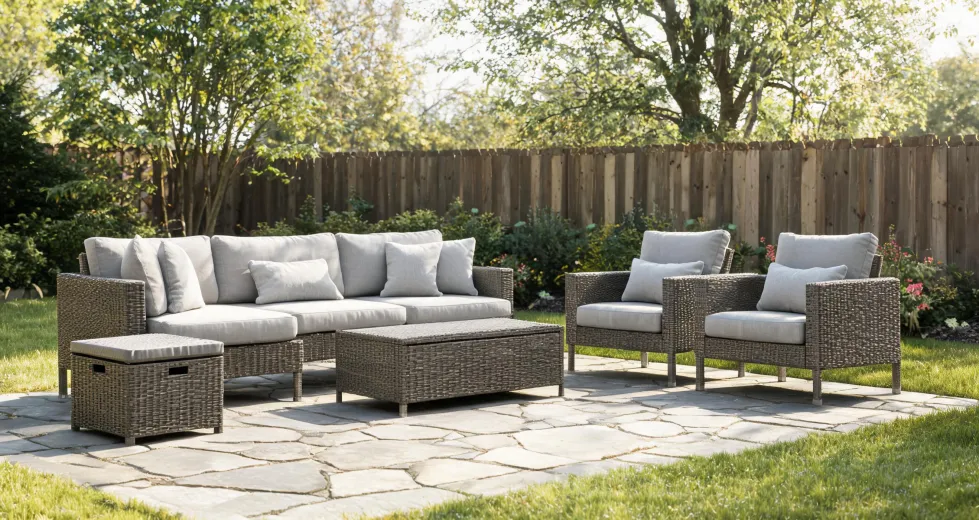
Yes, the devoko wicker patio conversation set is a smart buy for people with small to medium patios who want a comfortable seating area without overspending, as long as they plan for basic weather protection. It delivers an honest balance of price, comfort, and material quality, and it fits the way most households actually use a patio: weekend coffee, evening conversation, and a place to sit with two or three friends. The catch is that no wicker set survives years of uncovered exposure, so your decision should always include a cover, a shed, or a corner for storing cushions.
The Direct Answer
Is the devoko set actually worth your money, or are you just getting what you paid for? The answer is yes for the right buyer, and we want to be clear about who that is. If you have a 10-by-10-foot patio or a balcony that seats two to four, the set gives you a real outdoor room without the price wall of premium brands. It achieves that by pairing a powder-coated steel frame with resin wicker and cushions built for casual use. We weighed construction details, owner experience over two or three seasons, and common failure points in inexpensive patio furniture. With the right space and a basic protection plan, it outperforms ultra-budget options and luxury brands that cost much more. That plan need not be elaborate; a fitted cover and a habit of moving cushions indoors work. Those habits cost little, and the payoff shows in the second and third seasons, when cheap sets start to wobble and fade.
That recommendation comes with conditions. The devoko set is not the right choice for a large, uncovered deck exposed to extreme sun, heavy rain, or snow all year. It also may feel small if you host more than four people or want a lounger rather than a conversation-style seat. In those cases, consider a larger sectional, a dining set, or pieces made of metal or teak. But if your need is a cozy seating spot for two to four on a small to medium patio, and you can cover or store the cushions when they are not in use, the set fits the way buyers use it. We are not saying it is the only good set, only that it clears the bar for comfortable seating in the budget range. The key is to match the set to your real conditions and accept that no wicker set is maintenance-free; the ones that last are the ones whose owners plan for the weather.
Check the Frame and Wicker Grade
How much of the durability you pay for comes from the wicker itself? Most performance is in two details: the resin wicker grade and the frame underneath. Cheap sets wrap thin polypropylene strands over aluminum tubing that bends in a gust, while better sets use all-weather resin wicker with a higher strand density and a steel frame. The devoko set is in the better category for its price, with synthetic wicker designed to resist UV rays and moisture and a frame that will not rust out after a single rainy season. You need not be a materials expert; run your hand along the weave, pull gently on a strand, and rock a seat to test the frame. If the weave is tight and the frame is heavy, you have a set that can survive several years of normal patio life, which is the difference between a repeat purchase and a one-time buy.
Think of the construction like a sprinkler system that will not turn on: the failure usually traces back to one weak link, not the whole network. A sprinkler specialist will tell you the same logic applies to patio furniture. The frame is the weak link you need to inspect first, because a resin weave can look perfect while the steel underneath has already started to corrode. Ask for a powder-coated steel frame, check weld points, and tilt one of the seats to see if the legs wobble. When a set passes those checks, the wicker itself becomes a secondary concern. The lesson from irrigation troubleshooting is that most breakdowns start at the simplest, most exposed component, so spend your inspection minutes on the frame before you admire the weave. That habit pulls your attention to the structure that carries weight season after season, just as a sprinkler valve fails from one corroded wire and a patio chair fails from one thin leg. So the frame earns your scrutiny.
Measure Your Patio First
Before you add to your cart, do what a sprinkler designer does before drawing a zone: measure the space. The analogy is direct, because you cannot buy a system that fits a yard you never measured, and the same holds for a conversation set that must share a deck with a grill, a planter, and a walking path. Mark the patio perimeter, then note doorways, because the set must make at least one turn into the yard. Give yourself 18 to 24 inches of clearance in front so people can step around without squeezing. If your usable area is 10 by 10 feet, a conversation set with a width around 4 to 5 feet will fit comfortably; anything larger crowds the room. The measurement does two jobs at once: it prevents a too-big purchase and it tells you how much of your budget goes toward a cover or a small storage shed.
Once you have the numbers, match them to the set's footprint. A typical two-to-four-person conversation set runs about 40 to 50 inches wide and 25 to 30 inches deep for each chair, with a table in the middle. For a small balcony, consider the 2-seat version; for a 10-by-10 patio, the 4-seat configuration works and still leaves room for a side table or a small plant stand. Do not rely on product photos—wide-angle shots make furniture look smaller; sketch the dimensions or lay them out with tape. You should also measure the path from the delivery point to the patio, including gates and stairs. The smartest buyers we see order the set only after they have confirmed it will fit through their side gate, because the cheapest set in the world loses its value if you have to leave it disassembled in the hallway.
Protect It with a Cover or Shed
How long will the set last if you leave it outside in every season? The short answer is that no resin wicker set performs well under constant, uncovered exposure. Sun breaks down the plasticizer, moisture seeps into the weave, and cushions soak up dew and rain, leading to mildew and fading. The fix is not expensive: a fitted cover, a small shed, or carrying cushions indoors when not in use. Think of the set like good outdoor shoes: the leather survives for years with treatment, but it cracks quickly if you leave it in the weather. We recommend budgeting $40 to $80 for a cover or a small storage bin, because that cost does more for the set's longevity than paying another $100 for a different brand that still lacks a protection plan. Protect the cushions first, since replacing custom cushions costs almost as much as buying a new set. So the maintenance plan should be part of the purchase decision, not an afterthought.
Real homeowners prove the payoff of a simple storage routine: one Florida gardener used an outdoor shed for tools and cushions, saving repeated trips to the garage and keeping her patio furniture looking new, while another stored patio cushions, pillows, and umbrellas in a small vertical shed, which freed garage space so she could park her car inside again. These are practical examples of the same rule: storage does not need to be elaborate; it just needs to be habitual. At the end of each week, flip the seat cushions, brush off debris, and put them in a dry place before the evening dew settles. When you treat the cover and shed as part of the purchase, the set behaves like a long-term investment rather than a seasonal impulse buy. In our judgment, the money you invest in protection is the deciding factor between a set that lasts two seasons and one that lasts eight.
Compare Wicker vs Wood vs Metal
Which material should you actually choose when wicker, wood, and metal all sit in the same showroom? Each one solves a different problem. Wood, teak or eucalyptus, looks rich and ages gracefully but needs oiling, sealing, and sanding to prevent splitting, and costs more for equivalent seating. Metal (aluminum or steel) is strong and low maintenance but conducts heat and feels cold, and needs cushions for comfort. Wicker, including the resin wicker used in the devoko set, gives you the warmth of woven texture, a lighter footprint for small patios, and a friendlier price, at the cost of needing weather protection. For a typical household, we think the balance tilts toward wicker, because you get the look of a furnished outdoor room without the maintenance burden of wood or the heat issues of bare metal. The choice is not about which material is objectively better; it is about which one you will actually care for.
Market research shows a comfortable outdoor area is not just a nice-to-have. Demand for lawn and garden watering products is forecast to grow 2.6% annually to $1.5 billion by 2030, according to a Freedonia report, a strong sign that American homeowners are investing in usable outdoor space. That mindset is why we recommend seeing a conversation set as the anchor of an outdoor room, not a stand-alone item. When shoppers invest in the space first, they buy sets that fit the layout, add storage, and maintain the furniture—habits that protect a mid-priced set like devoko. The market trend also shows that buyers want durability and function, not just the lowest price, which is why a set with a solid frame and a clear care plan holds up better than a cheaper competitor. So the financial argument for the set is stronger when you pair it with the small extra spending on protection.
Your Final Checklist Before Checkout
Before you click buy, run this checklist in order. Measure the patio and the delivery route and write the numbers down, because the most common mistake is a set that is too wide after arrival. Inspect the specs for the frame material, look for powder-coated steel and a resin weave you can test in person, and compare cushion foam density if listed; denser foam lasts longer. Check seat count against your usual guests, and remember a 4-seat set doesn't mean four full-size loungers; look at actual seating dimensions. Confirm what protection you'll add—a cover, a shed, or an indoor storage corner—before you finalize the order. Finally, read the warranty and return policy so you know what happens if a weld fails or a cushion is damaged. Your goal is not to find a perfect set; it is to find one that fits your space, your guest count, and your willingness to care for it.
Here is the decision rule. If your patio is 10 by 10 feet or smaller, you need seating for two to four people, and you are ready to spend $40 to $80 on a cover or shed, then the devoko set is a sensible buy, and we would stop comparing and check out. If any condition is missing, move on or adjust. If you cannot cover the set, look for a material that tolerates full sun and rain, or buy the set and commit to carrying cushions inside every evening. If you routinely host more than four people, consider a sectional or additional chairs. If your budget is tight, a cheaper set will leave you with a weaker frame and faster wear, so it is worth stretching a little or waiting for a sale. When the space, guest count, and protection plan line up, the set will serve you well for many seasons.
The decision comes down to one rule: buy the devoko set if your patio is small to medium, you seat two to four, and you are willing to protect it; skip it if you cannot promise the cover or indoor storage. Many shoppers blame wicker after a year of full exposure, but the real cause was rain and UV without a plan. That's why the protection budget matters more than the brand budget. When you have a cover in your cart and a garage corner for cushions, the set becomes a smart, comfortable, genuinely lasting addition to your outdoor room.

Ingrid Falk
Ingrid Falk is an outdoor living products analyst specializing in fences, pergolas, gazebos, canopies, greenhouses, shade sails, patio sets, outdoor sofas, and weatherproof cushions. She uses ISO 4892-2 and ASTM G154 weathering methods while comparing UV color change, coating adhesion, corrosion resistance, frame load, joint stability, water shedding, and dimensional movement. Her work helps garden retailers, project buyers, and hospitality operators select structures and furniture suited to wind exposure, climate, installation method, maintenance, and expected occupancy.